


How Puglia’s Masserie Are Built
How Puglia’s Masserie Are Built: Architecture, Identity, and the Rebirth of Salento
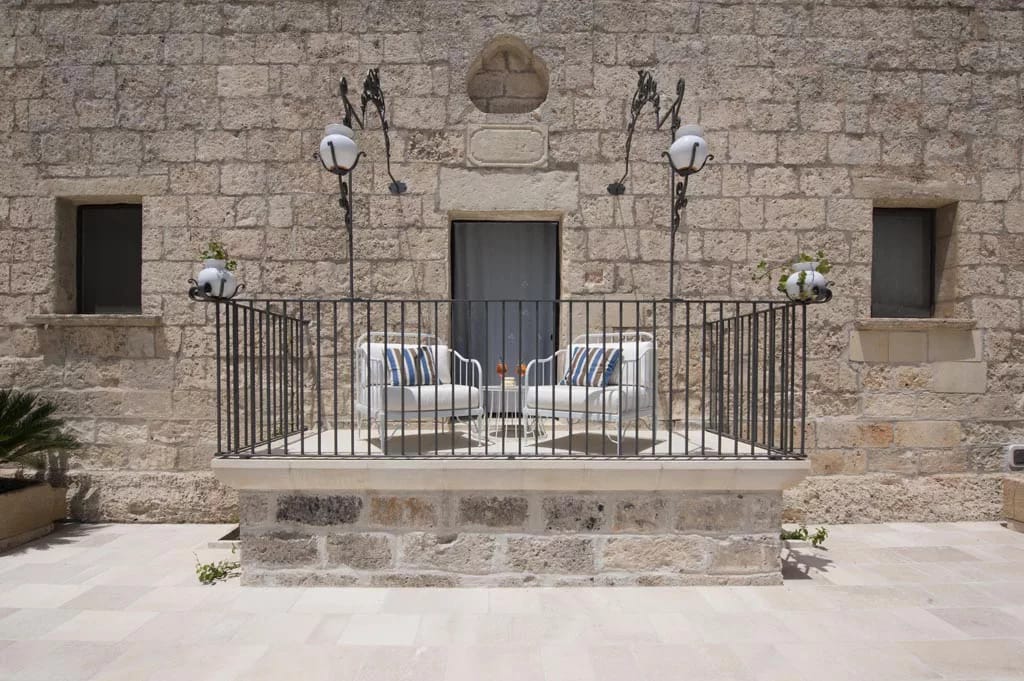
The first image that imprints itself on any traveller arriving in Puglia is not always the sea, but a white-stone building rising from the red earth as if grown there: the masseria.
These fortified farm estates, born of necessity and preserved through ingenuity, remain the truest heart of Apulian identity.
In the Salento, where crimson soil meets the turquoise Adriatic, the masseria stands as both historical witness and symbol of cultural renewal.
Origins — When Stone Was Shelter and Sustenance
Between the sixteenth and eighteenth centuries, southern Puglia was a frontier land: fertile yet exposed to raids from sea and steppe.
Vast estates belonging to nobles or monastic orders evolved into self-sufficient agricultural enclaves, designed to be productive — and defensible.
Thus were born the masserie: isolated compounds containing everything needed for life — houses, stables, storehouses, wells, chapels, even watchtowers.
Every wall answered a purpose: to protect, to produce, to endure.
Yet within this pure functionality lay an instinctive beauty — geometry, proportion, and light playing across pale limestone surfaces.
An Architecture of Light
The true soul of a masseria lies in its material: the soft, honey-colored Lecce stone, at once malleable and enduring, shifting hue with each hour of the day.
Walls often half a metre thick keep interiors cool in summer and warm in winter.
Star and barrel vaults lighten the weight of the ceilings and carve perfect geometries in space.
Central courtyards gather wind and life; small, shaded openings temper the southern sun.
Broad terraces once used for drying grain now open onto horizons that feel eternal.
Nothing in a masseria is ornamental; beauty is born of necessity — a silent harmony of proportion, light, and restraint.
Masserie of Salento — A Geography of Identity
Across Puglia each region shaped its own version of the type, but in Salento the form reached poetic perfection.
Here the limestone turns golden, dry-stone walls ripple like lines of verse, and ancient olive trees rise as natural cathedrals.
Salentine masserie, generally more compact than those of the Murge plateau, preserve the memory of a communal, agrarian civilization.
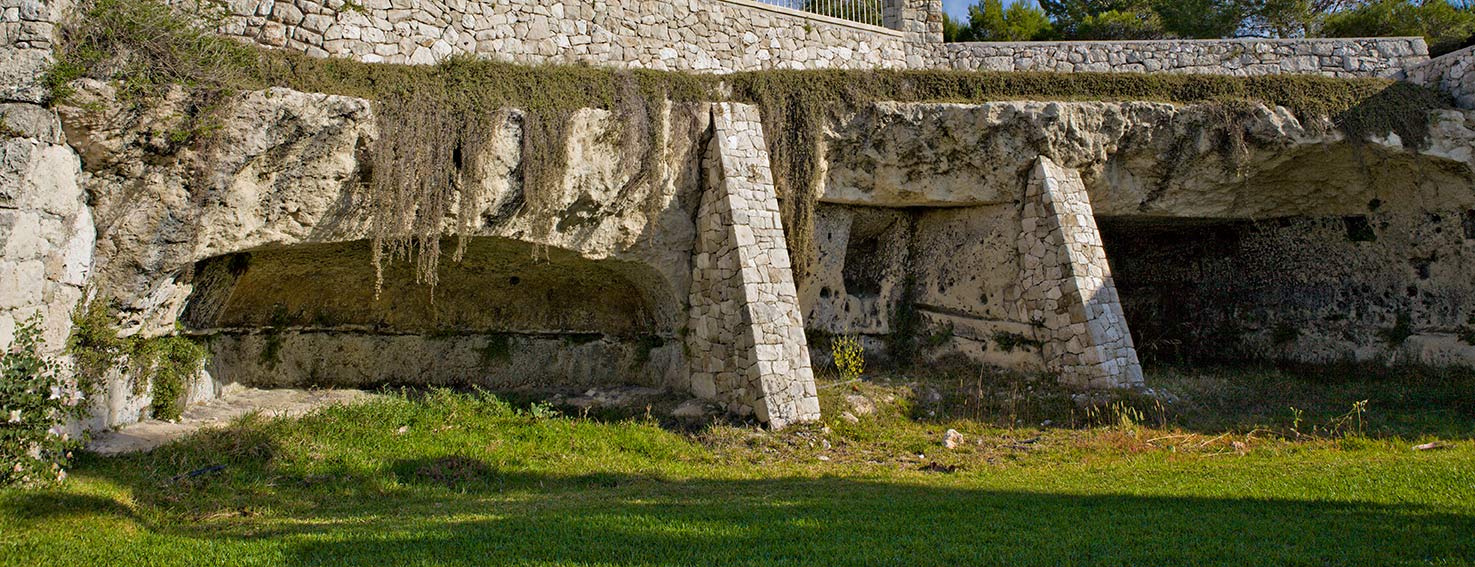
Many hide underground olive-oil mills carved into the tufa, where workers once pressed olives by candlelight.
Others shelter small frescoed chapels, traces of a humble yet steadfast faith.
Even the simplest masseria tells the story of a people’s resilience.
From Decline to Rebirth
During the twentieth century, as rural life emptied toward the cities, many masserie fell into ruin — stone crumbling under time, courtyards overgrown, silence reclaiming memory.
Then came the renaissance.
Over the last three decades, architects, entrepreneurs, and local families have rediscovered these places not as relics but as cultural resources and living landscapes.
To restore a masseria is to mend the bond between humans and the land.
Today hundreds live again as boutique retreats, restaurants, and sustainable farms.
Experiential tourism, when guided by respect, has returned to them their original role: spaces of work, welcome, and remembrance.
Masseria Panareo — A Living Example
Between Otranto and Porto Badisco, overlooking the Adriatic, Masseria Panareo stands as a perfect synthesis of that rebirth.
Local stone, restored with discretion, shapes bright interiors and open courtyards.
The pool merges seamlessly with the surrounding landscape, and the restaurant reinterprets peasant cuisine with contemporary grace.
Panareo does not imitate tradition — it inhabits it.
Architecture here is not a backdrop but a way of thinking: every space, from courtyard to sea-view terrace, embodies balance — between past and present, comfort and simplicity, nature and culture.
To stay at Panareo is to realize that the Puglian masseria is no nostalgic dream, but a way of inhabiting the future through memory.
The Masseria as Metaphor
Perhaps the fascination of Puglia’s masserie lies in their paradox: places of stone and light, labor and contemplation, seclusion and hospitality.
They represent a centuries-old model of sustainability, conceived long before the term existed.
Their strength lies in coherence — built to last, they continue to do so, adapting without surrender.
For the traveller discovering Salento, entering a masseria is like reading the history of a land through its foundations.
And for those who linger at Panareo, that history becomes experience — a perfect equilibrium between beauty and truth.
FAQ — Frequently Asked Questions
What is a masseria?
A traditional rural complex typical of southern Italy, originally a fortified farmstead and today often restored as a boutique hotel or restaurant.
Why are Salento’s masserie white?
The lime-based whitewash reflected sunlight and protected the stone from humidity and pests — function turned into beauty.
How can you recognize an authentic masseria?
By its proportions, central courtyard, underground oil-press, and the inseparable link with its surrounding farmland.
Why have masserie become popular again?
They embody slow, sustainable tourism, combining comfort, heritage, and a deep sense of place.

What Is a Masseria
What Is a Masseria? The Soul of Puglia’s Timeless Farmhouses
Across the sun-bleached plains of southern Italy, among groves of ancient olive trees and dry-stone walls, the word masseria evokes something more profound than a farmhouse.
It is a world enclosed in stone and silence, a microcosm that once sustained entire communities — and today, a symbol of Italy’s most authentic form of rural hospitality.
But what does “masseria” really mean? And what makes it different from a traditional farmhouse or agriturismo?
To answer that, one must look beyond definitions and step into the heart of the Puglian landscape itself.
The Meaning and Origins of the Word “Masseria”
The Italian term masseria stems from the Latin massa, which referred to a landed estate — a group of fields, houses, and pastures forming a self-sufficient agricultural domain.
During the Middle Ages, the massa evolved into a fortified rural complex managed by a “massaro,” the steward or overseer who ran the estate.
From this union of structure and stewardship emerged the masseria: at once a place, an economy, and a way of life.
By the seventeenth century, when Puglia was divided into vast feudal estates, masserie had become the beating heart of the countryside.
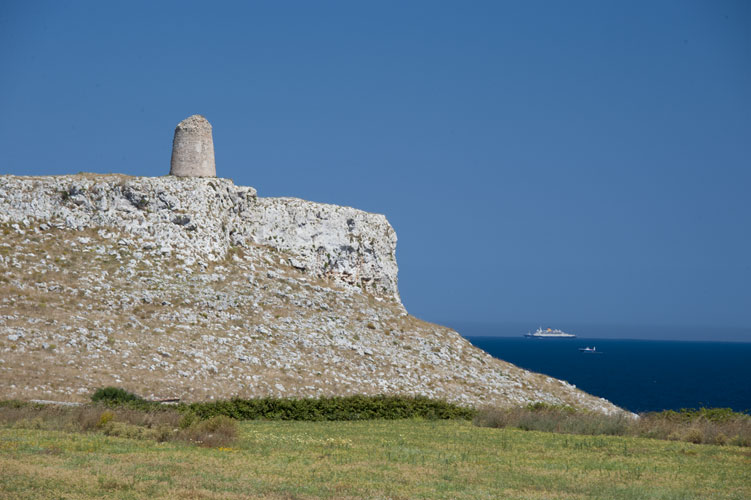
They were working fortresses — strongholds of stone and lime, often complete with towers, chapels, and inner courtyards to protect workers from pirates and brigands.
Their architecture — thick walls, sun-baked courtyards, whitewashed facades — still defines the region’s rural horizon.
Life Inside the Ancient Puglian Farmsteads
A masseria was more than a farm: it was a self-contained world.
Inside its walls, people lived, worked, worshipped, and produced everything they needed.
They grew wheat and vegetables, pressed oil and wine, made bread and cheese.
Nothing was wasted, and every gesture followed the rhythm of the seasons.
The upper floor usually housed the massaro or landowner’s family, while the ground floor contained stables, storage rooms, and the heart of daily life — the central courtyard, where work and community intertwined.
Many masserie included a small chapel, marking the sacred dimension of labor and the bond between man and land.
To live in a masseria was to belong to a shared destiny: to the earth, to the family, to time itself.
It was a hard life, yet one filled with knowledge, pride, and an unspoken harmony with nature.
From Working Estates to Cultural Icons
Today, the meaning of masseria has shifted from necessity to choice.
What was once an economic system has become a cultural symbol and a lifestyle ideal — the embodiment of authenticity, slow living, and connection to nature.
Across Puglia, hundreds of abandoned masserie have been lovingly restored into boutique hotels, luxury agriturismi, and gourmet retreats, where guests can sleep under vaulted ceilings, taste olive oil pressed on site, and rediscover the silence of rural life.
Even in their most refined forms, true masserie remain anchored to the land — not merely as architecture, but as identity.
Staying in a masseria means entering a living story: every stone, every olive tree tells a fragment of the past.
It is a sensory and cultural experience, a journey into the deep roots of Mediterranean civilization.
What Makes a Masseria Different from a Farmhouse
At first glance, a masseria might look like a farmhouse — but the difference runs deep.
A farmhouse is a general term, describing any agricultural property where crops are cultivated or livestock raised.
A masseria, by contrast, is a distinctly southern Italian phenomenon, born from centuries of feudal history and Mediterranean climate.
While northern farmhouses were part of an open market economy, masserie were self-sustaining microcosms, isolated and fortified.
The farmhouse was a functional structure; the masseria was a universe of stone and faith, where life, labor, and architecture merged into one.
Culturally, the masseria has become what the word farmhouse can never be:
a symbol of belonging, a cornerstone of Puglia’s identity, and a metaphor for rebirth — from forgotten estate to cherished retreat.
The Renaissance of the Masseria
Over the last few decades, Puglia has transformed its forgotten rural heritage into a cornerstone of sustainable tourism.
From the Murge to the Salento coast, hundreds of masserie have been reborn, marrying authenticity with comfort.
They now host wine tastings, olive-harvest experiences, cooking classes, and moments of pure stillness under the shade of centuries-old trees.
This renaissance is not only economic; it is cultural.
Each restored masseria is a living museum, a dialogue between past and present.
Luxury here does not mean opulence — it means time, silence, and simplicity.
A Symbol of Puglia’s Living Heritage
To say masseria today is to invoke an entire world of imagery: white walls against a cobalt sky, the scent of rosemary and sea salt, the timeless hum of cicadas in summer.
It represents a land that has turned hardship into grace, rurality into beauty.
The masseria is a philosophy as much as a place.
It teaches the art of slowness, the dignity of the essential, the power of landscape.
In its courtyards, the rhythm of the Mediterranean endures — unhurried, unspoiled, eternal.
Looking Ahead: Sustainability and the Future of Masserie
Beyond tourism, the modern masseria stands as a model of ecological and cultural sustainability.
Built from local limestone, naturally ventilated, and harmoniously integrated into the land, it embodies a wisdom older than any green label.
A new generation of farmers, hoteliers, and artisans is reviving the masseria tradition with organic agriculture, renewable energy, and creative hospitality.
Thus, the masseria returns to its essence: a place that cultivates both land and life, memory and innovation.
Understanding what a “masseria” means is to understand the soul of Puglia itself.
It is not merely a building, but a worldview — a testament to resilience, to simplicity, to the dialogue between man and landscape.
In every restored courtyard, the past whispers softly, reminding us that the future of travel — and perhaps of living — begins by listening to the land.
Masseria in Italy: the authentic charm of Salento between olive trees and the sea
The deeper meaning of a Masseria in Italy
Choosing a Masseria in Italy means stepping into the living memory of Puglia — a place where time slows down, and life regains its natural rhythm.
These ancient farmhouses, once the heart of rural life, have become sanctuaries of authentic hospitality, where every detail speaks of a deep connection between man and nature.
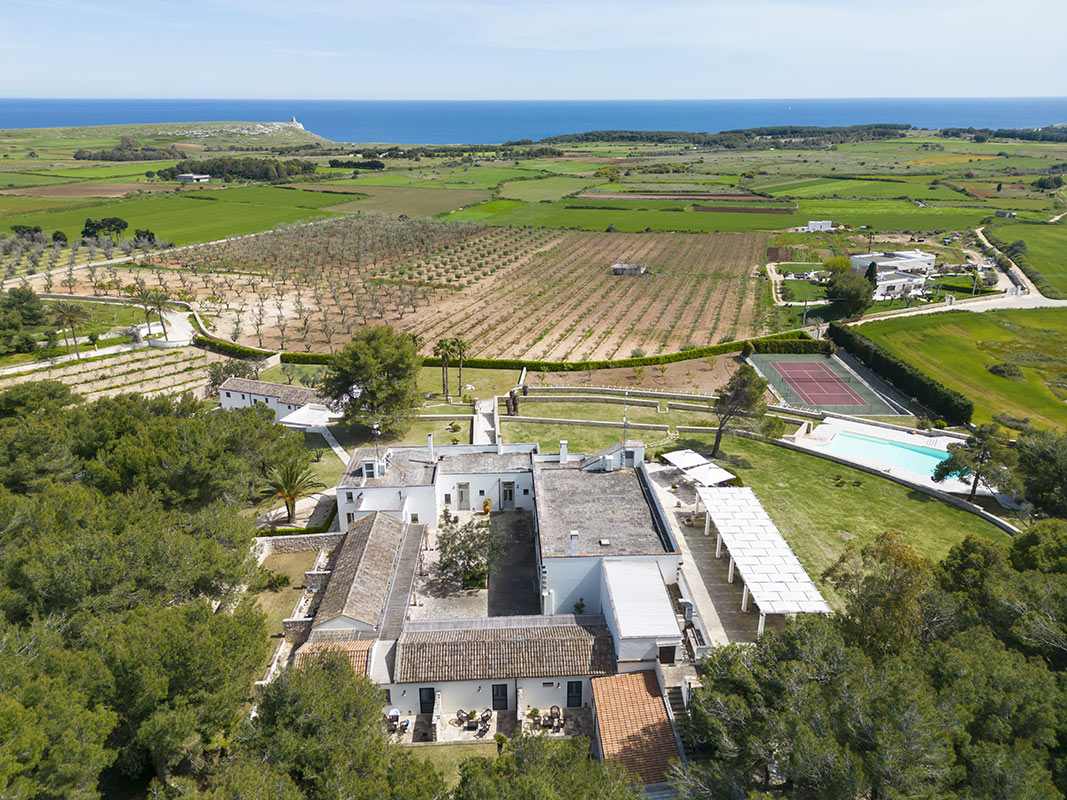
Surrounded by centuries-old olive trees, kissed by the Adriatic breeze, and built from the white limestone of the land, they embody the essence of southern Italy’s elegance and simplicity.
Every wall tells a story, every scent evokes a memory: the sun on the stones, the aroma of woodsmoke, the sound of wind through the olive branches.
Here, travellers rediscover what it means to live slowly and fully.
Between olive trees and sea: the landscape of Salento
The Salento region is a dialogue between land and sea, a landscape woven from colour and silence.
A few miles from the coast, the Masseria in Italy rises among olive groves, fig trees and dry-stone walls that trace the memory of ancient work and patient care.
Mornings begin with birdsong and the scent of freshly baked bread, while evenings dissolve into skies so full of stars they feel infinite.
Here, luxury is space, silence and authenticity.
It’s not about abundance, but about essence.
Staying in a masseria means finding harmony — between the earth beneath your feet and the light that surrounds everything.
Flavours and identity: the cuisine of the Salento countryside
The kitchen is the heart of every masseria.
Cooking here is a way of telling stories through flavours.
Each ingredient speaks of the region: olive oil from the estate’s groves, vegetables from the garden, fresh fish from the nearby coast, bread baked in a wood-fired oven.
The dishes follow the seasons, balancing simplicity and intensity, tradition and creativity.
Dining in a farmhouse like this means discovering the soul of Puglian culture, where hospitality is expressed through generosity and taste.
Every meal is a celebration of connection — between people, land and memory.
Experiences that reveal the spirit of Salento
A stay in a Masseria in Italy opens the door to experiences that go far beyond simple tourism.
Guests can walk among olive groves with a farmer, take part in olive oil tastings, join a cooking class, or explore hidden coastal villages such as Otranto, Castro or Specchia.
Each encounter deepens the relationship between traveller and place, turning a stay into a story.
In Salento, every gesture has meaning: sharing a meal, watching the sunset, breathing in the scent of thyme and sea salt.
Here, travel becomes participation — an act of belonging rather than observation.
Sustainability and heritage: the modern masseria
The revival of the Masseria in Italy is one of the most fascinating stories in Mediterranean hospitality.
Many estates have been carefully restored using original materials and traditional methods, balancing heritage and sustainability.
Solar energy, organic gardens, local stone and rainwater harvesting coexist harmoniously with centuries-old architecture.
This is the true meaning of sustainable luxury — comfort without excess, elegance rooted in respect.
A stay in a masseria is both a return to the past and a gesture towards the future: a choice to travel consciously, to value what endures.
An invitation to experience authentic Puglia
Staying in a Masseria in Italy means discovering that Puglia is not just a place — it’s a feeling.
It’s the warmth of its people, the golden light at sunset, the taste of tomatoes ripened under the Mediterranean sun.
It’s the slow rhythm of a land that invites you to stop, listen and simply be.
To travel here is to be transformed.
You don’t just visit — you connect.
Because authenticity is not something you look for: it’s something that finds you.
Quality hotels in Puglia: the value of slow and conscious travel
A new way of travelling
The way we travel is changing.
More and more people are leaving behind crowded destinations to find experiences that feel real, rooted and human.
In southern Italy, this shift has found its natural home in quality hotels in Puglia — places that embody a new philosophy of travel, where comfort meets conscience and authenticity defines every stay.
Here, luxury is measured not in stars, but in silence, space and sincerity.
Travelling in Puglia means rediscovering time, learning to pause, and finding beauty in small things.
The philosophy of slow travel
To travel slowly is to listen — to landscapes, to stories, to yourself.
It’s about taking the time to notice what usually escapes our eyes: a farmer tending his olive trees, an artisan shaping clay in a workshop, the smell of coffee drifting through a quiet piazza.
Slow travel is not about seeing more, but about seeing better.
Those who choose quality hotels in Puglia seek connection over convenience.
They want to understand the rhythm of local life, to experience a region where time still follows the pulse of the seasons.
In Salento, this rhythm is tangible: the light that shifts across the countryside, the breeze from the Adriatic, the unspoken warmth of hospitality.
Sustainability and comfort in harmony
The best quality hotels are not defined by their architecture or amenities alone, but by how they treat their surroundings.
Across Puglia, historic masserie and boutique stays have been carefully restored, embracing eco-friendly practices while preserving centuries of culture.
Solar energy, organic gardens, local materials and responsible design come together to create spaces that are both elegant and ethical.
This is sustainable luxury — discreet, meaningful, and in harmony with nature.
Guests can enjoy every comfort while knowing their stay supports a region committed to protecting its landscape and heritage.
Experiences that reveal the soul of Puglia
Travelling through this region means engaging all five senses.
The taste of olive oil just pressed, the sound of cicadas at noon, the touch of limestone walls still warm from the sun — every moment becomes part of a deeper story.
Many quality hotels offer guests the chance to live that story firsthand: cooking classes, wine tastings, guided walks through ancient olive groves, or simple evenings under a canopy of stars.
In these experiences, travellers rediscover something essential: that the most memorable journeys are not those that take you far, but those that take you deep.
The human side of hospitality
What truly defines quality hotels in Puglia is not their decor, but their people.
Hosts who welcome you as a friend, chefs who share their family recipes, artisans who open their workshops to curious visitors — this is the quiet magic of Puglia’s hospitality.
Here, service becomes care, and hospitality becomes connection.
Every encounter is genuine, and every guest becomes part of the story of the place.
This sense of belonging is what turns a stay into an experience, and a journey into a memory.
The future of travel: authenticity as a form of luxury
The evolution of travel in Puglia reflects a broader global movement — towards sustainability, quality and consciousness.
The region’s most distinctive quality hotels are at the forefront of this change: elegant yet grounded, innovative yet faithful to their roots.
They represent a way of travelling that values authenticity as the truest form of luxury.
Choosing Puglia means choosing to slow down, to live meaningfully, and to travel with intention.
Because the future of tourism will not belong to those who move the fastest, but to those who understand where they are.
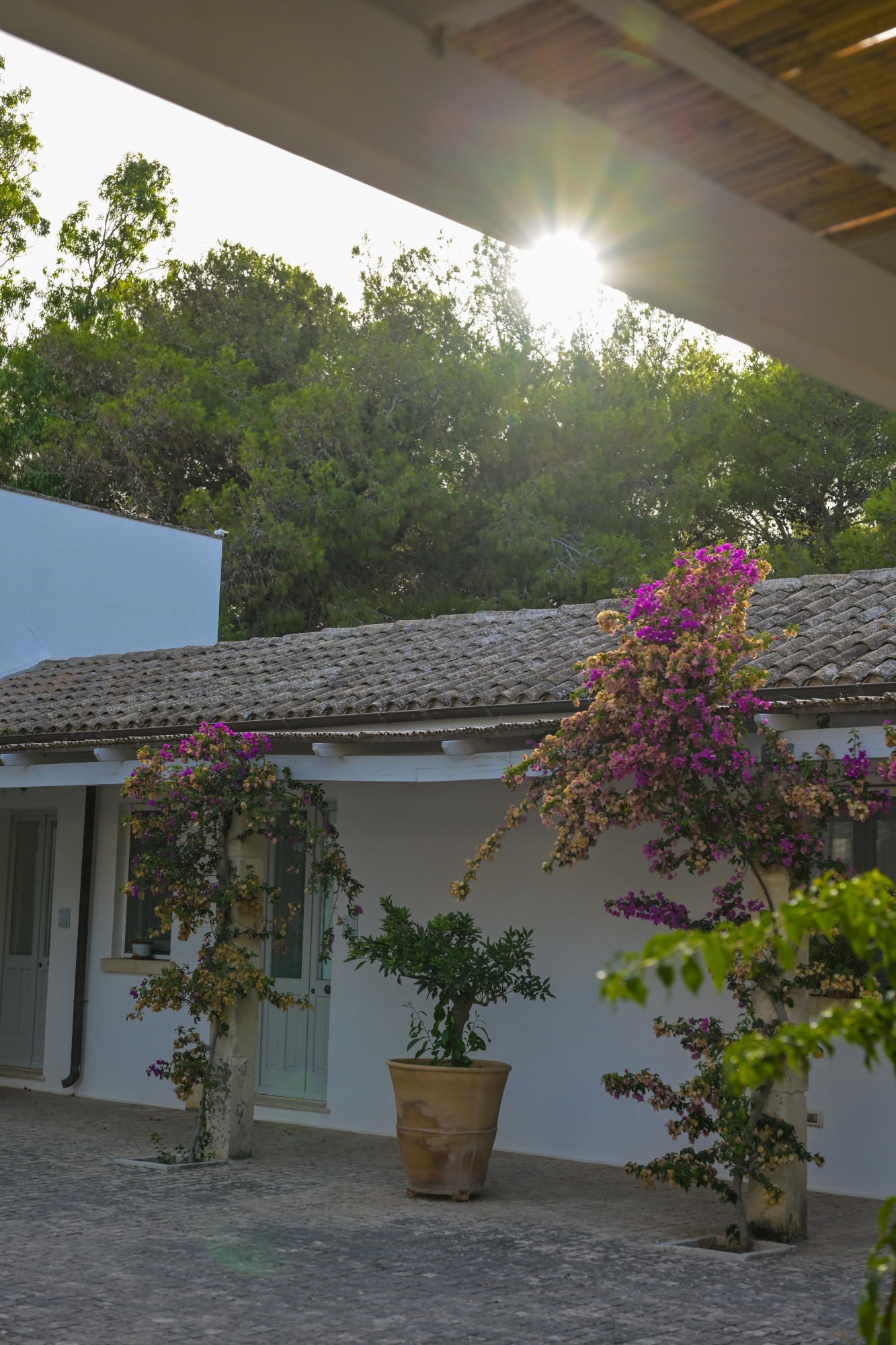
Historic Hotels in Puglia: timeless elegance at Masseria Panareo near Otranto
Historic Hotels in Puglia: discreet elegance and timeless roots
In the heart of Salento, where the sea meets red earth and endless olive groves, lie places that embody the truest sense of Mediterranean hospitality. These are the historic hotels, ancient dwellings that have endured through the centuries, transforming into spaces of refined welcome without ever losing their soul. Unlike anonymous accommodations found anywhere in the world, these rural houses express a rare balance: the solidity of peasant tradition combined with the elegance of contemporary living. Travelers searching historic hotels in Puglia are not chasing loud luxury, but seeking an experience woven with memory, style, and intimacy.
The charm of preserved heritage
Historic hotels in Puglia are heritage residences, often dating back to the 16th and 17th centuries. They were not designed as leisure retreats but as functional structures, built to protect families and harvests from raids coming from the sea. Their thick walls, monumental gates, and watchtowers tell a story of resilience, where architecture was the response to practical needs. Today, walking through these spaces means reading the traces of a past that has not been erased, but carefully preserved. Each inner courtyard, underground oil press, and rainwater cistern forms part of a narrative that still enchants those who choose to stay.
Architecture turned into style
What distinguishes true historic hotels is their ability to transform original agricultural features into a refined aesthetic language. Barrel vaults, limestone floors, and open loggias are not mere architectural details, but symbols of an identity renewed without losing its roots. Restoring these structures is a delicate task: one must respect the ancient material, retaining its authenticity, while introducing modern comforts for today’s traveler. The result is understated elegance that invites guests to linger, to appreciate the light filtering through windows, the play of shadows on whitewashed walls, and the scent of sun-warmed stone.
From rural stronghold to retreat of charm
The metamorphosis of these buildings into historic hotels is a story of vision and care. Once at the heart of agricultural life—stables, oil mills, storage rooms—they have been given new purpose through respectful restoration and reimagined design. They are not museums frozen in time, but living places where function and beauty coexist. A former stable may become an essential yet elegant suite, a mill can house a gourmet restaurant, and a rustic courtyard turns into a sky-lit lounge. This ability to reinterpret without betraying their origins is what makes the historic hotels of Puglia unique.
Masseria Panareo: Mediterranean charm with sea views
Among the most evocative historic hotels in Puglia stands Masseria Panareo, just a few kilometers from Otranto. Its location is privileged: behind it, the countryside dotted with olive trees; in front, the endless blue of the Adriatic. Here, nature is not a mere backdrop but a protagonist in silence. Panareo still holds the memory of rural life, translating it into hospitality where every detail counts: sober furnishings, luminous rooms, and communal spaces that invite both sharing and solitude.
A cultural landscape around the hotel
Choosing a historic hotel is not just about accommodation, but about entering a cultural landscape. Around Panareo lie trails leading to medieval villages, rock-cut chapels, ancient salt pans, and shepherds’ paths etched into the countryside. Salento is not only beaches: it is a mosaic of stories layered into the land. Staying in a masseria becomes a way to discover not just natural beauty but also the history and traditions of a region that has preserved its soul while embracing the future.
Dining as a ritual of style
In historic hotels, dining is never ordinary—it is an aesthetic ritual. At Panareo, recipes rooted in tradition are reinterpreted with elegance: carefully plated dishes, balanced portions, refined pairings with wines from the region. Bread baked in a wood-fired oven accompanies artisanal cheeses and handmade preserves; vegetables from the garden are combined with freshly caught fish, prepared with light techniques and matched with local vintages. It is Mediterranean sophistication, subtle yet intense, that turns a simple meal into an experience of style.
The sensory value of service
Charm is also expressed through service: attentive, discreet, never intrusive. In these hotels, hospitality is a language of care, conveyed through gestures that appear natural but are meticulously thought out. From personalized greetings to breakfast tailored to taste, from recommendations on wines to arranging unique experiences, everything contributes to creating an atmosphere that feels intimate and authentic. True elegance lies in this ability to respect the guest’s own rhythm while offering excellence.
For an international audience: luxury with roots
In recent years, historic hotels in Puglia have captured the attention of travelers from across the world. Visitors from Northern Europe, the United States, and major Italian cities are drawn to a form of luxury described as “luxury with roots”: not standardized opulence, but elegance rooted in land, craft, and memory. This is not about glittering excess but about meaningful experience—an invitation to feel part of a place, even if only for a few days, and to take home not just souvenirs but an enduring sense of belonging.
Experiences that enrich the stay
Beyond architecture and cuisine, historic hotels offer experiences that shape lasting memories. Guests may walk among centuries-old olive groves, join guided tastings with oil producers, participate in ceramics workshops, or explore hidden coves along the coast. Each activity is both learning and pleasure, a way of deepening one’s connection to the land. What makes a stay unique is this interplay between hospitality and experience, turning a holiday into a personal story worth retelling.
The contemporary meaning of charm
Speaking of historic hotels in Puglia today means speaking of discreet luxury: sobriety, attention to detail, respect for heritage. This is a kind of luxury that does not show off but whispers, that does not flatten differences but highlights uniqueness. In this sense, historic hotels are not mere places to sleep—they are spaces that redefine hospitality as something more intimate, more human, and more enduring.
Where memory meets elegance
Choosing a historic hotel in Puglia means choosing places that preserve. Entering Panareo is not stepping into a resort, but crossing into a suspended world where rural memory meets contemporary elegance. It is here, in this delicate balance, that a journey through Salento becomes unforgettable: not just a holiday, but an experience that lingers, like the scent of stone and sea carried away by those who leave.
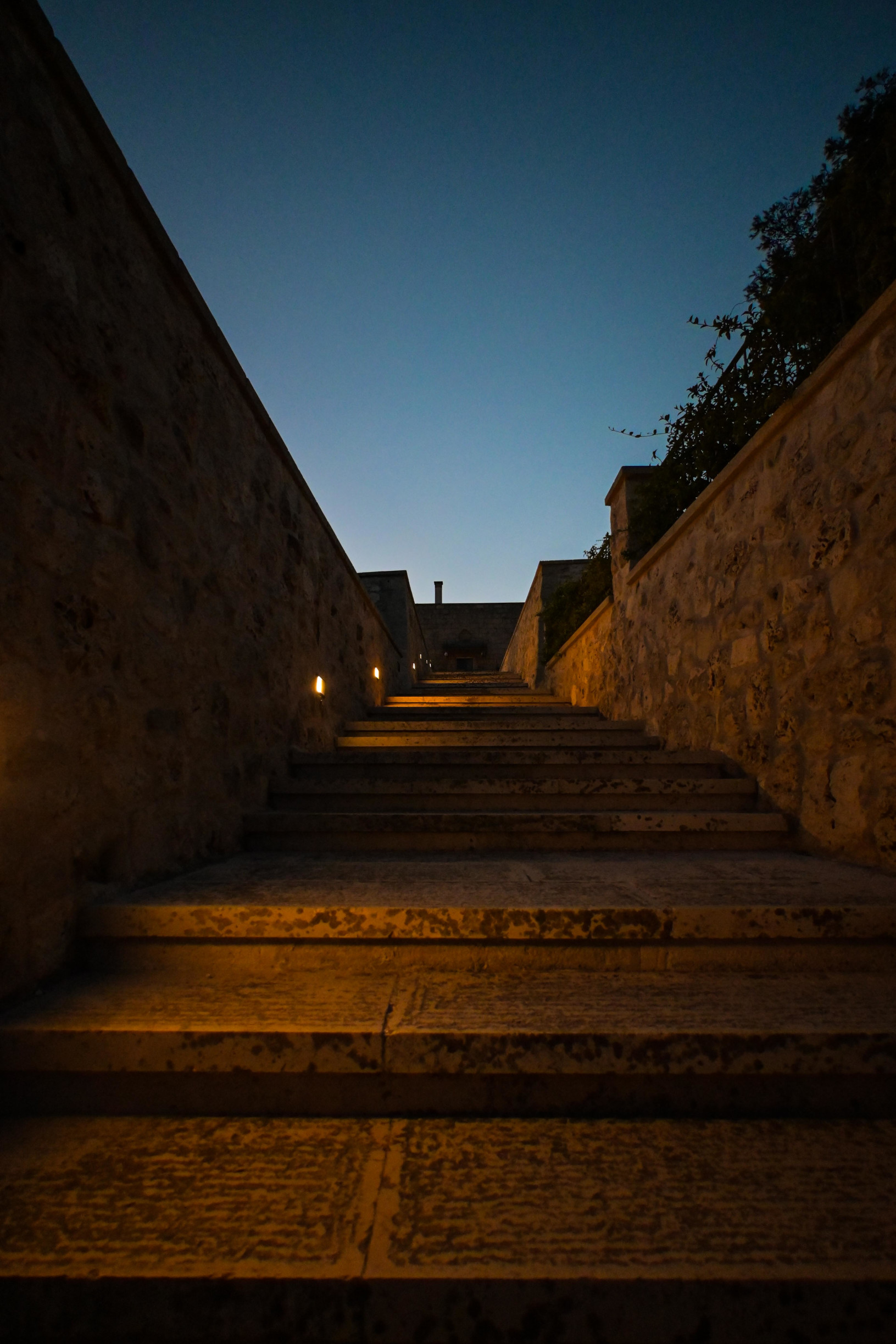
Puglia Hotels: authentic stays at Masseria Panareo near Otranto
Puglia Hotels: authenticity, landscape, and time rediscovered
There is no single way to tell the story of Puglia. There are beaches, baroque towns, traditional festivals. Yet those who truly seek the soul of this land often find it in the masserie: ancient farmhouses that have preserved centuries of rural life and now open their doors to travelers. For many, searching Puglia hotels is not just about booking a room—it is about discovering a place where history, simplicity, and elegance meet.
What makes a masseria in Puglia unique
A masseria is not a hotel disguised as a historic building. It is a place that rises from red earth and stone walls, surrounded by centuries-old olive trees. Once built to protect harvests and families, today these houses welcome visitors eager to live the South of Italy without filters.
Defining the best Puglia hotels is not about ranking them, but about understanding what modern travelers seek: authenticity, silence, seasonal cuisine, discreet beauty. What makes a stay memorable is not ostentatious luxury but the ability to make guests feel part of a living landscape.
Not all Puglia hotels are the same
Traveling across Puglia reveals a wide variety of masserie: those inland, surrounded by olive groves; those facing the sea with open horizons; others restored as refined retreats of charme.
The most remarkable Puglia hotels all share one feature: they preserve their agricultural roots while embracing hospitality. They don’t aim to impress with excess, but to reassure and inspire, offering a slower rhythm of life.
Rural hospitality and Mediterranean charm
Crossing the threshold of a masseria is like stepping into another world: whitewashed walls, spacious rooms with simple wooden furniture, linen sheets dried in the sun, the aroma of freshly baked bread.
The charm of these places does not come from extravagant details but from the balance between rural memory and Mediterranean refinement. It is an elegance that does not dazzle, but comforts—made of light, silence, and wide horizons.
Masseria Panareo: among the finest Puglia hotels
Among the most authentic examples is Masseria Panareo, located just a few kilometers from Otranto. Surrounded by ancient olive trees and overlooking the Adriatic, it embodies the essence of this region.
Staying here is not just about sleeping in a historic building, but about inhabiting a landscape: where stone, earth, and sea converge into a single experience.
Seasonal cuisine and local flavors
The kitchen is at the heart of Panareo’s philosophy. Here, the idea of being one of the finest Puglia hotels passes through the table. Dishes are created with vegetables from the on-site garden, fresh fish from local fishermen, and the farm’s own extra virgin olive oil.
There is no fixed menu: meals follow the seasons. Bread is kneaded every morning and baked in a wood-fired oven. Every flavor tells a story of territory and tradition.
Experiences between nature and the sea
Staying at Masseria Panareo also means rediscovering the value of simple gestures: a walk among olive groves, breakfast with sea views, a sunset watched from the courtyard.
For those who wish to explore, paths lead to hidden coves, historic villages, and natural parks. This is the essence of authentic Puglia hospitality: not just accommodation, but an encounter with nature and culture.
Why choose a masseria in Puglia today
In a world where everything runs fast, the true luxury of these places is time. A stay in a masseria is not about entertainment or packages, but about days that flow slowly, guided by nature’s rhythms.
Choosing one of the most authentic Puglia hotels means experiencing something rare: the privilege of slowing down, of reconnecting with food, with the land, and with people who welcome you with open hearts.
And when the journey ends, you bring back more than a holiday memory—you carry with you a new perception of time: one that does not rush, but walks beside you.
Where land meets horizon
Puglia is not only crystal-clear seas or baroque towns. Above all, it is places that keep stories alive, and masserie are their truest expression.
Among them, Masseria Panareo stands out as a destination that unites tradition and modernity, simplicity and elegance. For travelers searching Puglia hotels, this is where the word “finest” finds its real meaning: not in luxury, but in an experience that stays with you.
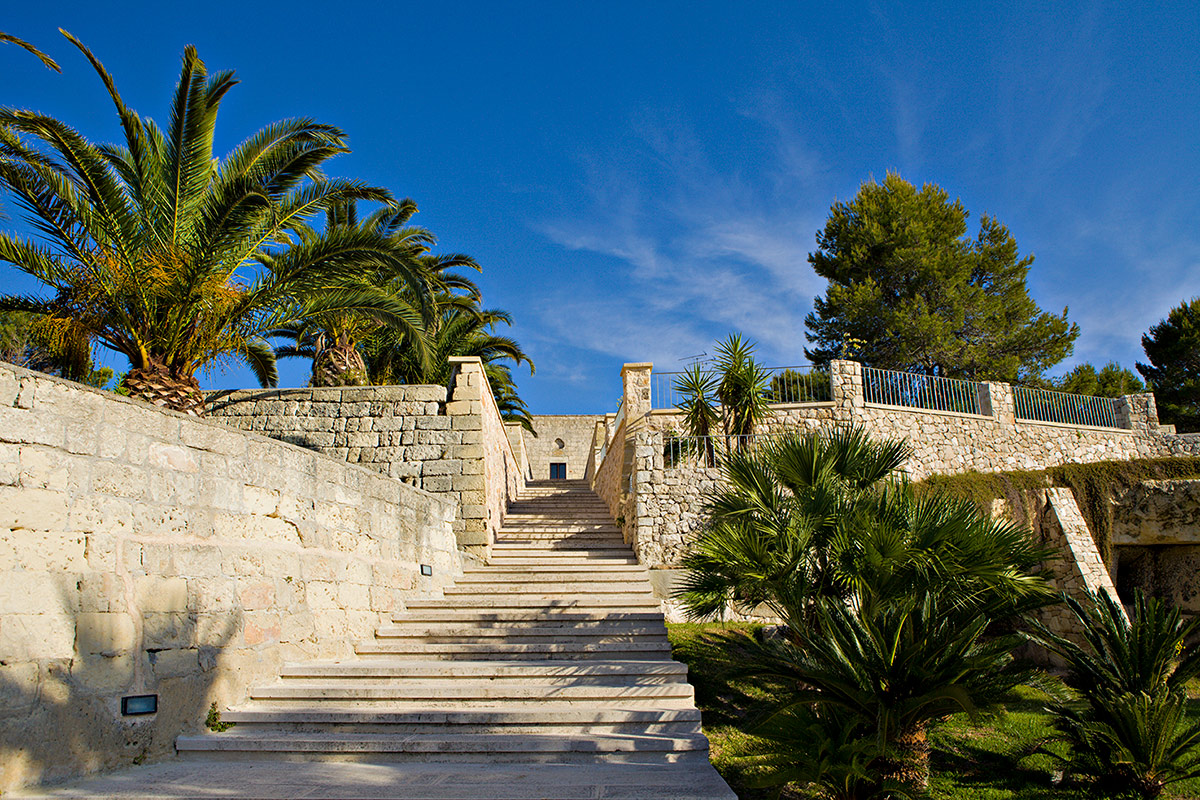
Charming Puglia: Authentic & Silent Hospitality in the South
Charming Puglia: Places That Promise Nothing, but Give You Everything
In an era where every destination tries to convince you it’s “the best,” real charm doesn’t need to shout.
What stays with you isn’t what’s listed on a website—it’s what you feel without anyone telling you.
The truth is, in charming Puglia, the most meaningful places aren’t those that overwhelm you.
They’re the ones that welcome you quietly, with time, space, and landscape.
When we talk about “the best places to stay in Puglia,” perhaps we should move beyond rankings and amenities.
What really matters is the quality of what lingers when you leave.
More than a label: What charm really means
An authentic masseria isn’t just a restored farmhouse.
It’s a way of welcoming that makes you feel part of something grounded.
You’ll often find a few things in common:
- Historic stone architecture, raw and essential
- A deep connection with the land and its natural rhythm
- Quiet spaces, never trying too hard
- Food that speaks the language of memory
In this context, charming Puglia isn’t about design trends or curated luxury.
It’s about choosing what feels true, and leaving out the rest.
Why Puglia holds this kind of beauty
This southern region of Italy isn’t a stage.
It’s a place that doesn’t try to impress you, but slowly reveals itself.
Olive groves stretching endlessly.
Dry stone walls crossing the fields like quiet lines of poetry.
The sharp light of noon.
The sound of the wind shifting everything.
Here, a masseria doesn’t stand out—it breathes in sync with the land.
No need for artificial drama.
Just real space, real time, and the chance to be.
Panareo: a place that doesn’t pretend
At Masseria Panareo, nothing is forced.
This property, set between the sea and the countryside near Otranto, doesn’t perform.
It just stays true to itself.
Every choice here follows a logic of restraint and authenticity:
- Climbing plants are left free to cover the stone walls
- The kitchen follows the seasons, not the market
- The rooms don’t flaunt luxury, they express it—through silence, materials, and light
- The pool is not a feature—it’s a moment of stillness, facing the horizon
People don’t come here to be entertained.
They come to slow down. And often, they return.
Not for everyone. But exactly right for someone.
This is not the place for those who need a packed schedule.
Not for those who expect activity and distraction.
This is for people who know how to slow down.
Who love reading in the shade.
Who watch the sky change and feel it’s enough.
Guests who choose charming Puglia seek depth.
They don’t want to be surprised—they want to feel recognised.
And that’s what charm really is: the quiet feeling of being in the right place without needing to explain why.
The landscape isn’t a backdrop—it’s part of the experience
In places like Panareo, the landscape isn’t decorative.
It’s essential.
The light filters through olive branches.
The scent of the sea mixes with wild herbs.
The silence isn’t emptiness—it’s presence.
And you feel it everywhere: in the morning light, in the food, in the way you sleep.
This is the difference between something that’s just “beautiful” and something that makes you feel.
What time feels like here
What you find in places like this isn’t just comfort—it’s a different relationship with time.
- You sleep better
- You eat more slowly
- You breathe more deeply
- You remember more clearly
In a world that races ahead, staying somewhere that invites you to stop is a quiet revolution.
And that’s why people come back.
Not because everything was perfect.
But because something essential happened, softly, quietly.
You’re not looking for the best—you’re looking for yours
When you search for “charming Puglia,” you’re probably not looking for a resort.
You’re looking for a place that speaks your language.
One that doesn’t try to sell itself, but simply waits to be found.
Panareo doesn’t persuade you.
It doesn’t shout.
It welcomes.
And if you find something familiar in its olive trees, in the weight of its silence, in the softness of its light—then you may already know:
You’ve arrived.
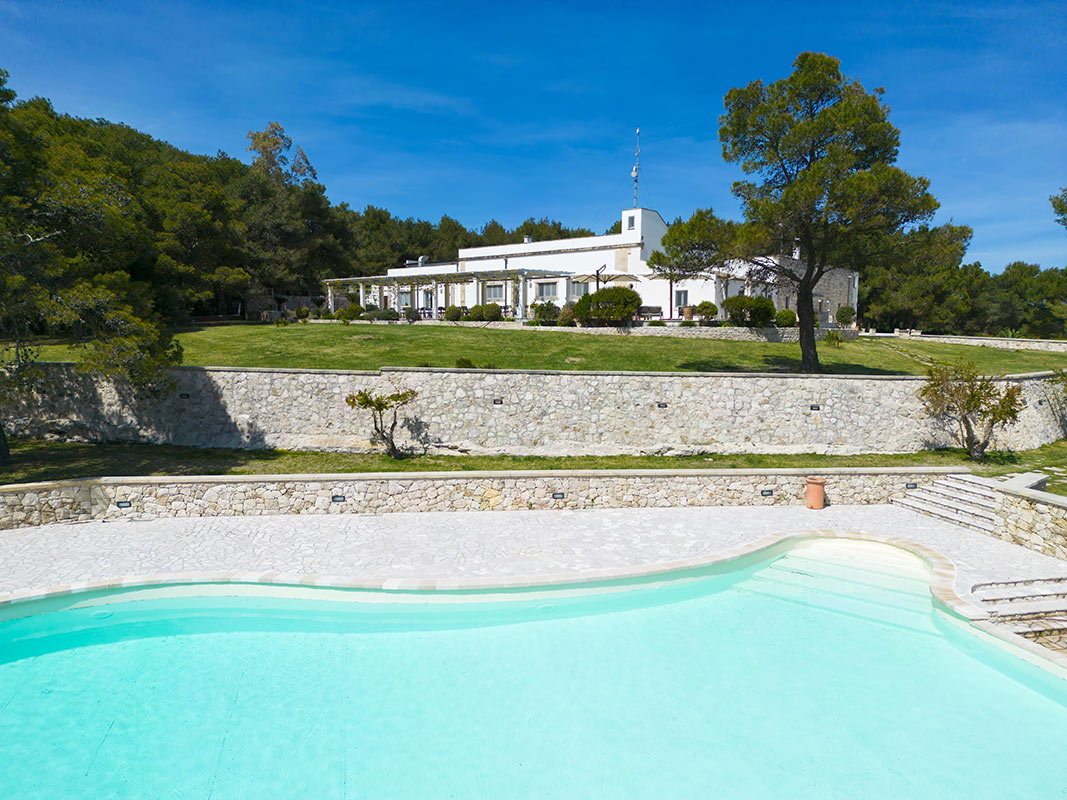
Puglia Resorts with Pools: Where Light and Silence Meet
Puglia Resorts: Not Just a Place to Stay, But a Pause That Stays With You
Some experiences don’t need explanation.
Watching the sky reflect in still water. Feeling the wind move through olive trees. Letting silence surround you.
And realising—without effort—that you’ve found the right place.
A Puglia resort with a pool isn’t about services or features.
It’s a different kind of invitation:
To slow down, to breathe, to rest.
To find balance between land and light, between ancient stone and quiet water.
This isn’t an amenity. It’s a rhythm.
Where the pool doesn’t interrupt, but continues the landscape
In many places, a pool is a statement. An extra. A status symbol.
Not here.
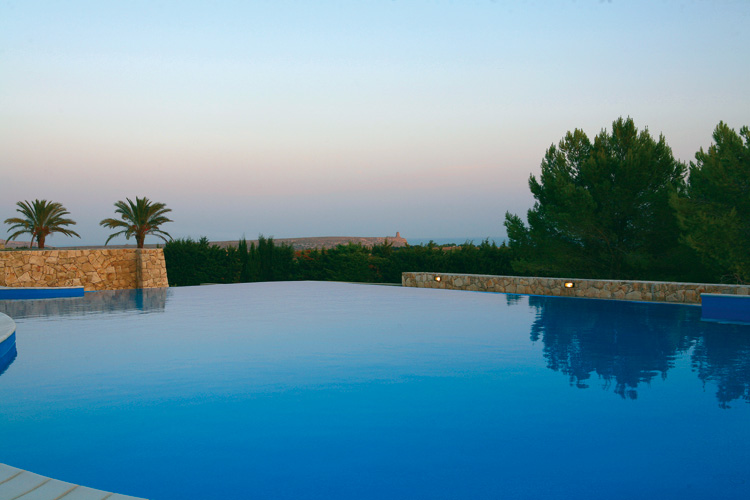
At Panareo, the pool stretches toward the sea.
Surrounded by olive trees and dry-stone walls, it feels more like a natural element than a built feature.
It doesn’t shout—it simply waits.
You can meet it on your own time:
- In the morning, with sunlight filtering through silence
- At noon, suspended in stillness
- In the evening, watching the sky change, slowly
Water as slow rhythm
In a land of bright sun and rough stone, water is care.
A way to unwind. To return to yourself.
Not for show, but for quiet moments:
A slow swim, a floating breath, the sound of nothing but the day slipping past your shoulders.
At some Puglia resorts, the pool is a box to tick.
Here, it’s a pause with meaning.
The resort as a refuge. The pool as a deep breath
Choosing a Puglia resort like this one means choosing a different pace.
It’s not about adding more—it’s about needing less.
For many guests, the pool becomes a ritual.
Not an activity. A rhythm.
Time expands.
Evenings slow down.
You eat when you're hungry. You read when you want.
And you don’t need anything more.
Panareo: where land and water share one breath
At Masseria Panareo, the pool doesn’t try to impress.
It belongs.
It mirrors the structure’s quiet lines, the tone of the landscape, the philosophy of restraint.
There’s no music by the water.
No bar lights.
Just the wind, the light, and the stillness.
The real beauty?
Nothing feels forced.
Everything just fits.
This isn’t for everyone—and that’s the point
If you need a packed itinerary, this might not be for you.
But if you’re looking for:
- Slowness
- Space
- Light
- A sense of being gently held by the landscape
...then perhaps you’re not looking for a destination at all.
You’re looking for resonance.
Some guests come for the first time.
Many return.
Not because of what they did—but because of how they felt.
What stays is the memory of stillness
Many remember the late afternoons:
When the sun moves slowly across the courtyard.
When the stone stays warm.
When the water holds the light just a little longer.
That’s when you realise:
Rest isn’t empty—it’s full.
And once you’ve felt it, it’s hard to forget
A pool isn’t always meaningful—but here, it’s presence
There are many pools in many places.
But few belong to their surroundings the way this one does.
Few invite you to do nothing without feeling guilty.
This isn’t about trend.
It’s about truth.
Some Puglia resorts give you services.
This one gives you space.
Boutique farmhouse in Puglia
Boutique farmhouse in Puglia: essential elegance, authentic roots
In a travel market saturated with promises and clichés, the idea of a boutique farmhouse in Puglia can be easily misunderstood.
This is not about decoration or aesthetic trends — it’s about the quality of experience.
A masseria with true charm isn’t just a place to stay; it’s a form of hospitality rooted in tradition, built with care, and deeply connected to the land.
It’s a precise idea of silent luxury: made of real spaces, restored time, and gestures that matter.
Beyond the label: what “boutique charm” really means
There’s no strict definition, but certain elements tend to appear:
- Historic architecture using local materials (Lecce stone, tuff, lime);
- Balanced design that blends heritage with modern minimalism;
- Intimate, personal spaces that never feel standardized;
- Strong harmony with the surrounding landscape and agricultural identity.
In this context, charm isn’t about opulence — it’s authenticity raised to aesthetic dignity.
It’s a refusal to copy global trends, in favor of asserting a local, quiet, refined beauty.
Why Puglia is the natural home for this philosophy
Puglia — especially Salento — lends itself instinctively to this kind of experience.
The landscape is sculpted by millennia-old olive trees, dry stone walls, sun-drenched fields, sharp light, and wind that clears both air and thought.
In such a setting, the boutique farmhouse in Puglia is not an intrusion, but an organic part of the environment.
It doesn’t impose itself — it breathes with the land.
This is a region that offers itself without pretense.
And the charm of its masserie interprets this honesty through refined restraint.
It doesn’t promise escape from the world, but a better way of being within it: slower, more mindful, more real.
Who chooses a boutique farmhouse — and why
The guests drawn to this kind of property are rarely casual.
They are mindful travelers, often from Italy or Northern Europe, with a high cultural sensibility and non-negotiable expectations:
- silence,
- authenticity,
- sense of place,
- food rooted in the land,
- total absence of the banal.
They don’t seek entertainment — they seek cultural and sensory depth.
They love beauty, but don’t want to be surprised.
They want to be recognized — and for them, charm means exactly that: feeling part of something meaningful, without the need to explain it.
Architecture and interiors: where every detail has a story
The allure of many boutique farmhouse in Puglia lies in how they preserve memory and turn it into contemporary comfort.
- Rooms don’t offer giant screens, but views of the fields.
- Bathrooms are built in raw stone; floors are clay, concrete, or aged terracotta.
- Furniture combines handcrafted recovery with essential design — never overdone.
Nothing feels random, and yet nothing feels forced.
You don’t need to be told it’s high quality — you can feel it.
Landscape as part of the experience
A true boutique farmhouse is not separated from the world — it’s immersed in an ecosystem.
The pool reflects ancient olive trees.
Breakfast is served beneath grapevine pergolas.
Paths lead not to fences, but to wild coves or quiet kitchen gardens.
There are no visual or symbolic barriers between the guest and what surrounds them.
Nature enters the room, the plate, the sleep.
This is what distinguishes mere beauty from genuine charm: harmony with the land isn’t decoration — it’s essence.
The kitchen: roots, discipline, and truth
In a boutique farmhouse in Puglia, food isn’t a performance. It’s a form of cultural expression.
It’s not folkloric. It’s intentional.
- Menus follow the rhythm of seasons.
- Vegetables are grown onsite.
- Bread is kneaded by hand.
- Oil is produced from the masseria’s own olives.
- Fish is sourced from small coastal boats.
Dinner becomes more than a meal: it’s translation.
The territory is transformed into texture, flavor, and ritual.
Time: the rarest luxury of all
Perhaps the most important promise a boutique farmhouse in Puglia can make is this: the return of time.
Time to sleep deeply.
Time to walk without purpose.
Time to understand where you are.
In a world where every second is scheduled, choosing to stay in a place that invites you to stop — to truly stop — is a radical act.
And that’s why guests return.
Not just for the comfort, but because something clicked.
They felt aligned with a place, a rhythm, a silence.
Something hard to explain — and impossible to forget.
Why choose a boutique farmhouse now
In an age where tourism often becomes consumption, choosing a boutique farmhouse in Puglia is a counter-current gesture.
It’s a refusal of standardization.
It’s the pursuit of beauty you don’t buy — you recognize.
It’s the desire to belong to a place, not just pass through it.
If this resonates with you — if you’re seeking not just comfort, but a different sense of time, an essential balance between beauty, truth, and silence —
then discover Masseria Panareo.
A boutique farmhouse in the heart of Salento, where every detail tells a story.
Discover more → masseriapanareo.com
Puglia Travel you don’t watch this land
Puglia Travel: you don’t watch this land — you live it
Puglia travel begins with a truth: this land doesn’t tolerate hurry. Everything here — a landscape, a dish, a craft — asks for time to be truly understood.
It’s not enough to drive across Salento or skim a few guidebook pages. This place reveals itself to those who slow down, listen, observe with respect.
And in that slow, deep relationship, travel stops being movement — and becomes real experience.
But for experience to happen, it needs something rare: the right context. Not just a place that welcomes, but a place that makes things happen.
Not a hotel, not a resort — but an authentic masseria, where beauty isn’t displayed. It’s lived.
Experience is not a checklist — it’s a direction
When we talk about Salento experiences today, we often risk superficiality. Doing is confused with living, seeing with understanding.
Real Puglia travel is about feeling part of something — not being entertained. It means eating bread you saw being kneaded.
Walking roads you won’t find on Google Maps. Touching, listening, learning — not “trying something new,” but reconnecting with something essential.
Dinner among olive trees, where every light is real
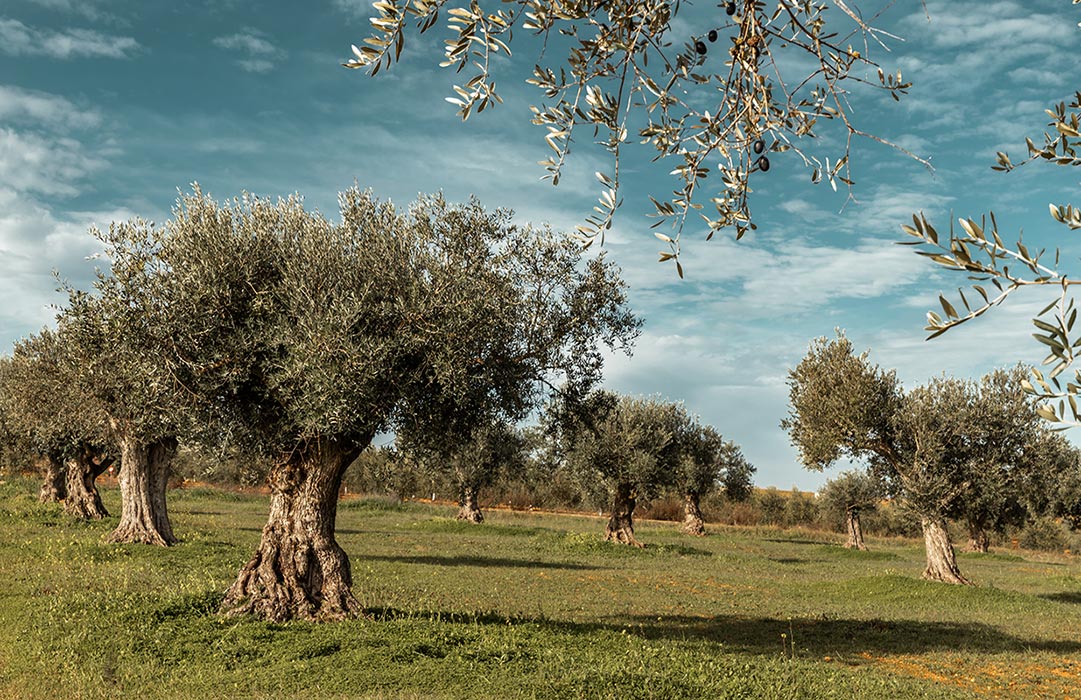
Picture a table for two, set beneath ancient olive trees. No background music — only wind through the branches, cicadas, the sound of wine pouring into a glass. A dinner prepared by a discreet chef, who tells a quiet culinary story with local ingredients.
Low lanterns, open sky, silence. In moments like these, simplicity becomes luxury.
And time slows down without asking permission.
Body, breath, space: wellness without aesthetics
Between a dry-stone wall and an olive tree, a mat and the sky. A private outdoor yoga session may seem like a detail — but it’s a powerful gesture.
Not exercise, but re-centering. Breathing deeply in the countryside, with no noise or clocks, is a way to tune the body to the land.
In an age where even relaxation is scheduled, taking time to listen inward becomes an act of quiet rebellion.
Sunset from the sea: the horizon reveals itself from afar
Some places are best understood from the outside. Sailing along the Salento coast on a private boat is an experience made of light and slow rhythm. Grottos, coves, shifting colors.
A swim in clear waters, far from everything, followed by a simple aperitif: cool wine, rustic flavors, bread. No forced luxury, no choreography — just the chance to feel time drift like the sea beneath the bow.
Where there’s a bottle, there’s a story
Salento is land of oil and wine — but most of all, of people who make them. Visiting a small oil mill or winery means entering a familiar space, where processes are shared, not hidden. Tasting isn’t just sampling — it’s knowing the harvest rhythm, the scent of vats, the silence of cellars. You taste three wines or oils — but mostly, you enter a story with deep roots. And it changes how you drink, savor, remember.
To truly understand, use your hands
In a craft workshop, you don’t watch — you do. Ceramics, weaving, olive wood — not as souvenirs, but as gestures.
Next to an artisan, you learn not just techniques but rhythms. The slowness of hands, the value of repetition, the courage of imperfection. What you bring home isn’t precious because it’s perfect — but because it’s yours.
Handpicked olives: the land becomes gesture
From October to December, Salento’s countryside comes alive. It’s olive harvest season. Joining this ritual isn’t a gimmick — it’s a way to touch the earth’s cycle.
You harvest, listen to those who do it by heart, and taste new oil, still warm. You return home with a bottle — and a new measure of the seasons.
Two wheels, endless freedom
Sometimes, freedom is the best experience. A scooter, a hand-drawn map, and light to follow: coastlines, villages, country roads. You stop where a balcony charms you or a bakery pulls you in.
And you find that distance matters less than the beauty of your stops.
Puglia travel is about leaving with more than memories
True experiences in Salento don’t end when you leave. They stay in your gestures: how you pour oil, set a table, seek silence. Puglia travel, lived this way, doesn’t leave memories — it leaves marks.
Those who come here don’t want noise, but quiet, lasting traces. Some places don’t promise experience — they let it happen.
And in Salento, if you know where to look, they happen every day.